
In 2022 we decided to start a brand new Flexitank division, to offer an alternative for tank containers to our old and new clients.
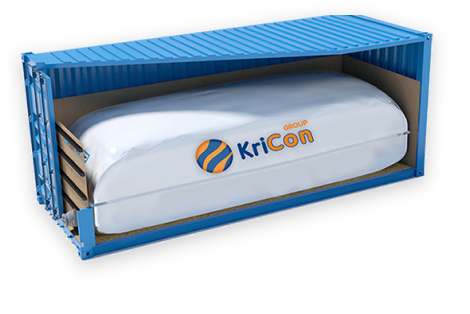
It is a multilayer and very strong polypropylene bag, which is fitted in any 20ft dry container and can be then transported to any part of the world, without the need of repositioning the empty container afterwards.
Flexitanks are known best for transportation of non hazardous liquid chemicals and foodstuff.
Frequently Asked Questions
What is a flexitank and how does it work?
A flexitank is a large collapsible plastic bag, typically 16,000 to 24,000 litres, fitted inside a standard 20-foot dry container to carry non-hazardous bulk liquids. The flexitank is filled through a single valve at the container doors and is single-use — disposed of after delivery. Kricon offers flexitank services for non-hazardous bulk cargoes where a full ISO tank grade is not required.
What liquids can be shipped in a flexitank?
Flexitanks are suited to non-hazardous bulk liquids including edible oils, wines, fruit juices, glycerine, latex, base oils and non-hazardous industrial fluids. The single-use bag eliminates cross-contamination between shipments, making it a practical choice for food-grade and cosmetic-grade products. Hazardous materials classified under ADR or IMDG cannot be transported in a flexitank.
What is the difference between a flexitank and an ISO tank container?
The key differences are reusability, cargo range, and cost structure. An ISO tank container is a permanent stainless-steel vessel reusable across hundreds of shipments and approved for hazardous as well as non-hazardous liquids. A flexitank is a single-use bag, lower in cost per shipment, but limited to non-hazardous cargo only.